Look up at the upper chapel windows
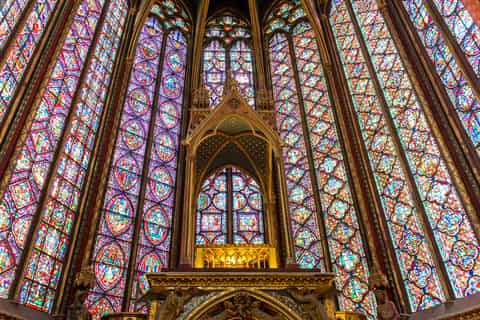
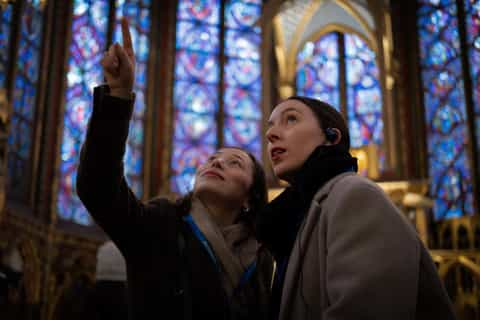
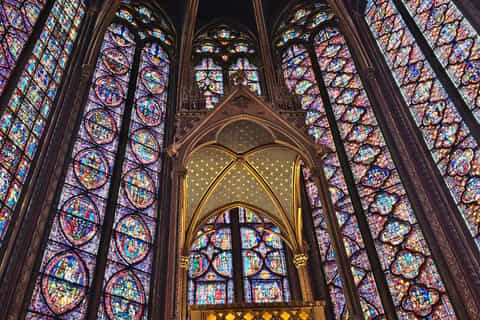
The upper chapel holds 15 major stained-glass bays. Stand back, then move closer to see how the scenes run around the walls. Most visitors look at one panel and miss the full sequence that wraps the room.
Start with the upper chapel glass, notice the lower chapel first, then choose whether to add the Conciergerie, Notre Dame outside, or a walk toward the Île de la Cité streets around the Palais de Justice.
Do not try to read every panel. Follow the building in order, then stop where the glass, the relic story, and the lower chapel each tell a different part of the visit.
The upper chapel holds 15 major stained-glass bays. Stand back, then move closer to see how the scenes run around the walls. Most visitors look at one panel and miss the full sequence that wraps the room.
This window tells the story of the relics that brought the chapel here. Look for Louis IX carrying them barefoot with his brother. It is the clearest link between the glass and the building’s purpose.
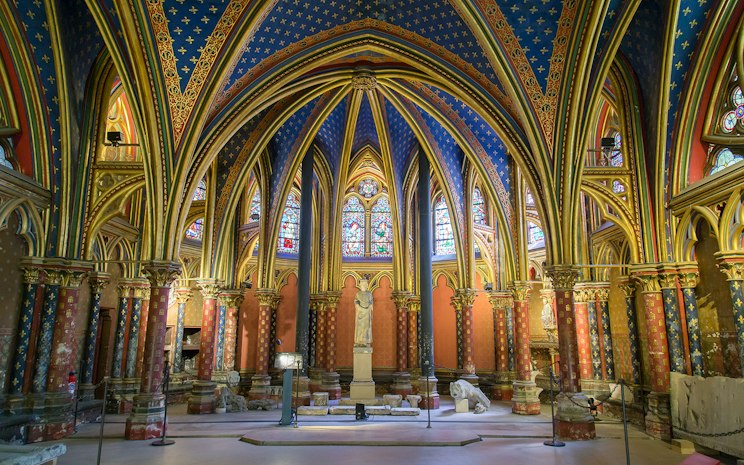
The lower chapel feels smaller and darker on purpose. It was the staff chapel, so the contrast with the upper room is part of the design. Take a minute here before climbing up, so the change feels stronger.
The chapel is a Rayonnant Gothic structure, so the stone feels light and narrow beside the windows. Look at the edges between tracery, vaults and glass. That is where the building shows how it was made to feel weightless.
Do not stop at the windows. The painted vaults and the rhythm of the arches guide your view through the whole room. They keep the chapel from feeling like one giant image and make it read as one structure.
The rose window is later than the main chapel and belongs to another style. It gives the west end a different feel. Look for the Apocalypse scene and the way the round shape changes the pace of the room.
The chapel works well on its own, but a guide or audioguide helps the relic story and the window sequence make sense faster. That matters if you want more than a quick look up and down the nave.
Arrive at the time on your ticket, not early. You still pass Palais de Justice checks before you enter, so build in slack even with a reserved slot.
Do not automatically add every nearby attraction. Choose one or two based on time and energy left.
The next-door former palace prison gives the same area a very different mood. It adds civic and revolutionary history rather than repeating the chapel’s religious focus, so the two visits fit together well.
A short walk around the island gives you a break from security and timed entry. It adds river views, bridges and street life without another ticket. Use it when you want the day to breathe.
Notre Dame is a separate visit, but the exterior works well if you want a short continuation nearby. It changes the day from relics and glass to a cathedral exterior and the square around it.
The Seine gives you the easiest reset after the chapel. It is close, free, and simple to fit into the day. That makes it useful if you do not want another timed entry or indoor queue.
The area around the Seine can absorb more time than people plan for. Treat it as a wider-day add-on, not a quick extra, if you still want to see more of central Paris after Sainte Chapelle.
It fits the same security zone and adds a different chapter of Paris history. That makes it the best paired stop when you want the visit to stay inside the same area.
The river gives you air, benches, and an easy way to slow the day down. It is the simplest addition if your next booking is later.
This keeps you moving without another indoor queue. It works best if you want a short walk and a clear view change after the chapel.
Pick a guide if you want the glass and relic story explained. Pick independent entry if you mainly want time inside.
Keep it to the upper glass, the Bay of the Relics, and the lower chapel contrast. Anything more starts to feel rushed.
Choose the Conciergerie, or a short river walk, or the Notre Dame exterior. Do not try to fit all three around one timed visit.
The choice depends less on the ticket name than on what you actually want: entry only, a guide, or a second site in the same plan.
This gives you timed access to Sainte Chapelle without a live guide. It suits visitors who want to move at their own pace and focus on the stained glass.
This works well if you want help reading the glass, the relics and the building layers in one visit. It gives context, but it does not make the security process shorter.
This is the right format when you want both monuments in one booking. It keeps the Sainte Chapelle slot fixed, while the second site can be visited before or after.
This suits visitors who want a wider walk around the area rather than a full interior visit. It is useful if you care more about the outside setting and the nearby route.
These three bookings are compared by access, format and the kind of day they help you build.
Most reviewed
A strong choice if you want two nearby sights in one booking and care about value. It suits a day built around simple access rather than a live guided explanation.
Guided + second site
Useful if you want one guide to connect the chapel, the prison history and the Notre Dame area. It is best when explanation matters as much as access.
Highly rated tour
A better fit if you want the Notre Dame area outside and a broader walking route. Check the access details carefully, because the title does not guarantee the same interior visit as the other options.
Sainte Chapelle Tickets is an independent visitor guide and is not the official Sainte Chapelle website. Some links are affiliate links, which means we may earn a commission at no extra cost to you. *Ratings, review counts and starting prices come from the supplied booking data and can change; check the live booking page for your date and selected option.
Keep food simple and close by. Sainte Chapelle sits inside a strict security zone, so it is easier to eat before or after than to squeeze a long meal into the middle.
Use a café or bakery near the Île de la Cité side of your route. That keeps you close to the security entrance and avoids rushing a meal before your timed slot.
After the chapel, a sit-down lunch or coffee works best once the timed part is over. The nearby river edge is the easiest place to slow down before the next sight.
If you are continuing to the Conciergerie or Notre Dame area, choose a short snack rather than a long meal. That keeps the day on time and leaves room for walking.
The difference between a good day and an exhausting one is usually how many separate things someone tries to fit around one timed visit.
The current rule was not fully verified, so do not make the visit depend on photos. Plan for the glass and the room first, then confirm the policy on your booking page.
Combined names can be misleading. Read the inclusions line so you know whether the Conciergerie, Notre Dame outside, or only Sainte Chapelle is covered.
Security and queues can slow you down even with a ticket. Leave slack after Sainte Chapelle so the day does not collapse if entry takes longer.
The chapel is short, but the upper level and security can still feel like a lot. Pick either the glass, the relic story, or the nearby walk as the main focus.
Step outside after the visit if you need a reset. The river and the island streets give you space without another ticket or another queue.
If you want a simple visit, choose entry only. If you want more context, take the guide. If you want two sites, choose the combined ticket and protect the Sainte Chapelle time slot.
Most first-time visitors should book timed entry, spend their time on the upper chapel glass and the Bay of the Relics, then add only one extra: the Conciergerie, a short river walk, or the Notre Dame exterior.